Home › Guides › Rent, lease or buy
Buying guide
Rent, lease or buy a modular building? A 2026 decision guide
How to choose between renting, leasing and buying a modular office, classroom or job site trailer, what actually drives the cost, and the questions to ask before you sign.
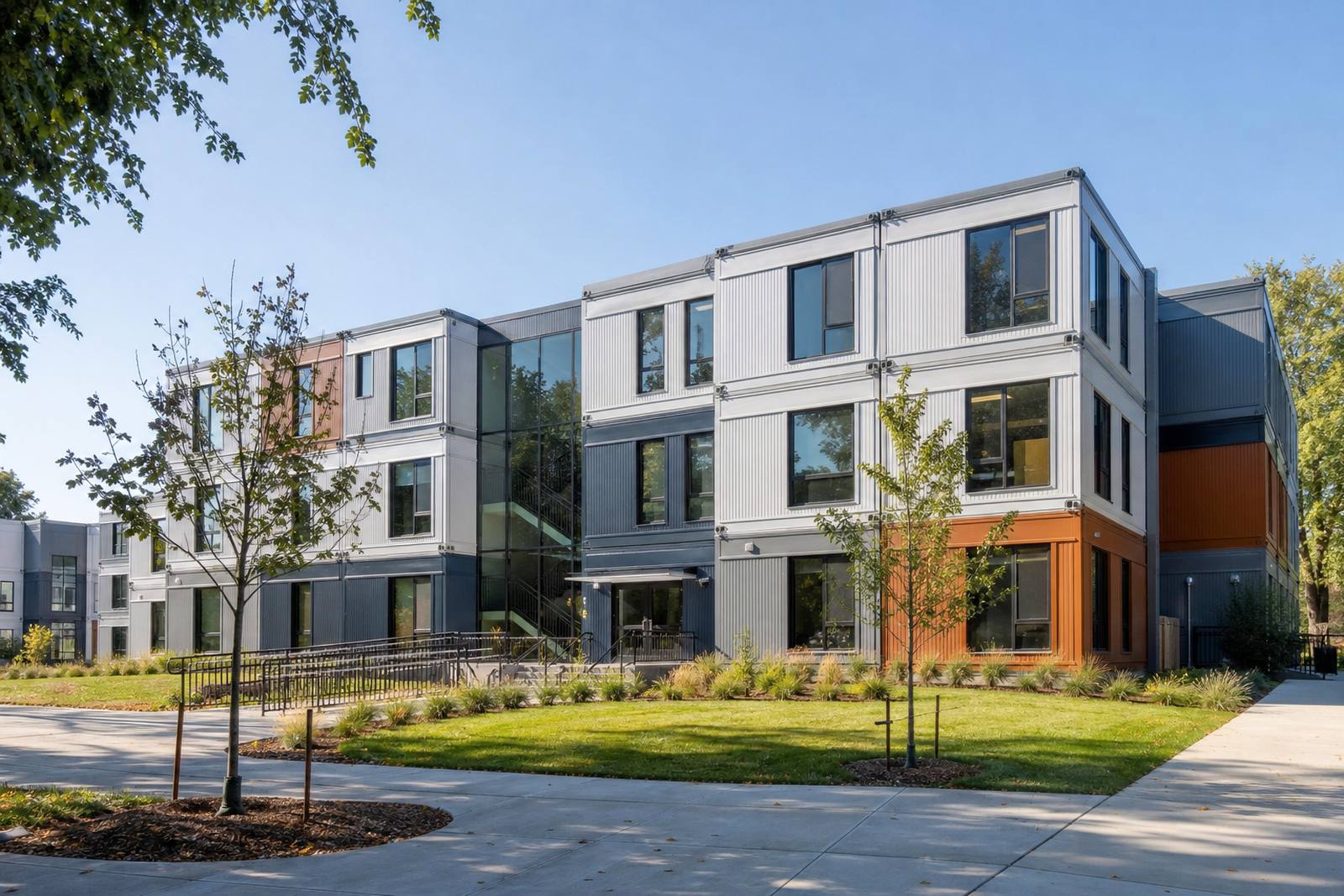
Whether you should rent, lease or buy a modular building comes down to three questions: how long you need the space, how much you want to spend up front, and whether the building needs to stay where you put it. Renting suits short projects measured in weeks or months, leasing suits multi-year needs without a large capital outlay, and buying usually costs the least over the long run when you need the space for many years.
Quick answer: Rent for short or uncertain needs (construction sites, events, temporary overflow). Lease for 1 to 5 years of predictable use (classroom expansions, growing teams). Buy when you'll use the building for many years, want to customize it, or plan to make it permanent. Whatever you choose, the total cost depends far more on size, site work, delivery and options than on the label "rent" or "buy". Get quotes for more than one option and compare the total over your real timeline.
This guide walks through each option, what drives modular building costs, real-world scenarios, and a checklist you can use when comparing quotes. If you already know what you need, you can skip ahead and request a free quote.
The three options at a glance
| Rent | Lease | Buy | |
|---|---|---|---|
| Typical term | Weeks to months | About 1–5 years | Indefinite |
| Up-front cost | Lowest (delivery and setup are often the main up-front charges) | Low to moderate | Highest (full purchase price plus site work) |
| Monthly cost | Highest per month | Lower per month than short rentals | None after purchase (except upkeep, utilities, insurance) |
| Customization | Limited to fleet units and add-ons | Some, depending on the program | Full: layout, finishes, systems |
| Relocation & removal | Handled at end of term | Handled at end of term | Your choice: keep, move or resell |
| Best for | Construction sites, events, emergencies | Classroom growth, swing space, growing teams | Long-term offices, campuses, permanent buildings |
When renting makes sense
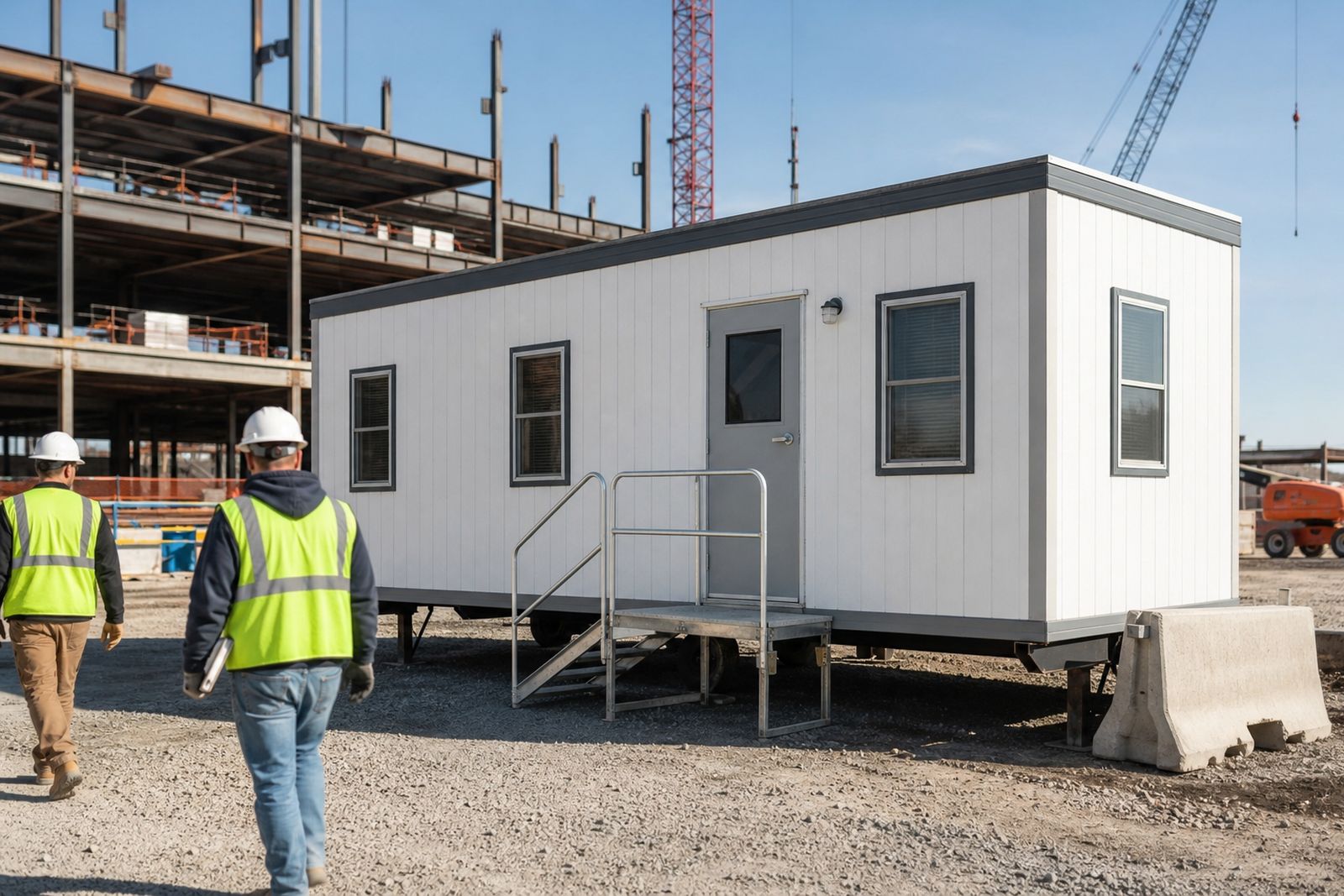
Renting is the most flexible way to get space quickly. Rental fleets keep standard units such as single-wide office trailers and double-wide offices, and those units can often be delivered faster than a new building because they already exist. You pay for the time you use plus delivery, setup and removal.
Renting is usually the right call when:
- The need is short or uncertain. A construction project, a seasonal peak, an event or a disaster response.
- Speed matters more than layout. You can work with a standard floor plan.
- You don't want an asset to manage. No resale, storage or long-term maintenance.
The catch: monthly rent on a short term is the most expensive way to pay for space over time, and add-ons like steps, ramps, skirting, furniture and security packages are often billed separately. For job sites specifically, see our page on construction trailers and mobile offices.
When leasing makes sense
Leasing sits between renting and buying. Terms typically run a year or more, and longer terms usually lower the monthly rate. Many leases include delivery, installation and removal in the structure of the deal, and some programs offer lease-to-own options where part of your payments can apply toward purchase (availability varies by supplier and unit).
Leasing tends to fit:
- Schools adding classrooms for enrollment growth that may or may not last. See portable classrooms.
- Swing space during renovations at hospitals, campuses and offices, where you need the building for the life of the project.
- Growing companies that need more room now but aren't ready to commit capital to a permanent building.
Leases can be harder to exit early than short rentals, so match the term to a realistic timeline and ask about extension and early-return terms before signing. Our modular building rental and leasing page explains the options in more detail.
When buying makes sense
Buying has the highest up-front cost but usually the lowest total cost when you'll use the building for many years. You also get full control over the layout, finishes and systems, and you can keep, relocate or resell the building later.
Buying is usually best when:
- The use is long-term or permanent, such as a branch office, a permanent classroom wing or a clinic.
- You need a custom layout that rental fleets don't offer.
- You want the building on a permanent foundation to look and perform like conventional construction.
You can buy new (built to order, fully customizable, longer lead time) or used (lower price, faster, limited to what's available). Used units are a common middle ground for offices and classrooms when the budget is tight and the floor plan works.
What actually drives the cost
People often compare a monthly rental rate with a purchase price and stop there. The real number includes much more. Industry suppliers point to the same set of factors, whether you rent, lease or buy:
- Size and layout. Cost rises with square footage, the number of rooms, restrooms and circulation space.
- New vs. used. Used and fleet units cost less and move faster; new units cost more but can be customized.
- Term length (rent and lease). Longer terms usually lower the monthly rate.
- Delivery distance and logistics. Transport costs grow with distance and unit size; tight urban sites or remote locations can add escorts, permits and coordination.
- Site work. Grading, foundations or blocking, paving and access can be a significant share of the total project cost.
- Utilities. Electrical, water, sewer, data and their permits are site-specific and handled by licensed trades.
- Add-ons. Steps and ramps, ADA access, skirting, furniture, restrooms, security packages, fire alarm tie-ins and IT.
- Removal at the end. For rentals and leases, ask whether teardown and return transport are included or billed separately.
- Ongoing costs. Electricity, heating and cooling, water, internet, insurance and maintenance continue whatever you choose.
A simple total-cost worksheet
To compare options fairly, list every cost over the same period, for example 36 months. Fill in each line from your quotes:
| Cost line | Rent / lease | Buy |
|---|---|---|
| Building | Monthly rate × months | Purchase price (new or used) |
| Delivery & installation | Delivery, setup, leveling, tie-downs | Same, plus any crane or special transport |
| Site work & foundation | Blocking or temporary supports, grading, access | Blocking or permanent foundation, grading, paving |
| Utilities & permits | Connections and permits for the term | Connections and permits |
| Add-ons | Steps, ramps, skirting, furniture (often monthly) | Steps, ramps, skirting, furniture (purchased) |
| End of term | Teardown and return transport | Resale value, relocation, or nothing if it stays |
| Ongoing | Utilities, insurance, damage waiver | Utilities, insurance, maintenance |
The option with the lowest total over your realistic timeline is usually the right one, unless flexibility is worth paying for. Be honest about the timeline: "temporary" buildings often stay longer than planned, which is exactly when buying used or lease-to-own starts to look better.
Site preparation: blocking vs. permanent foundations
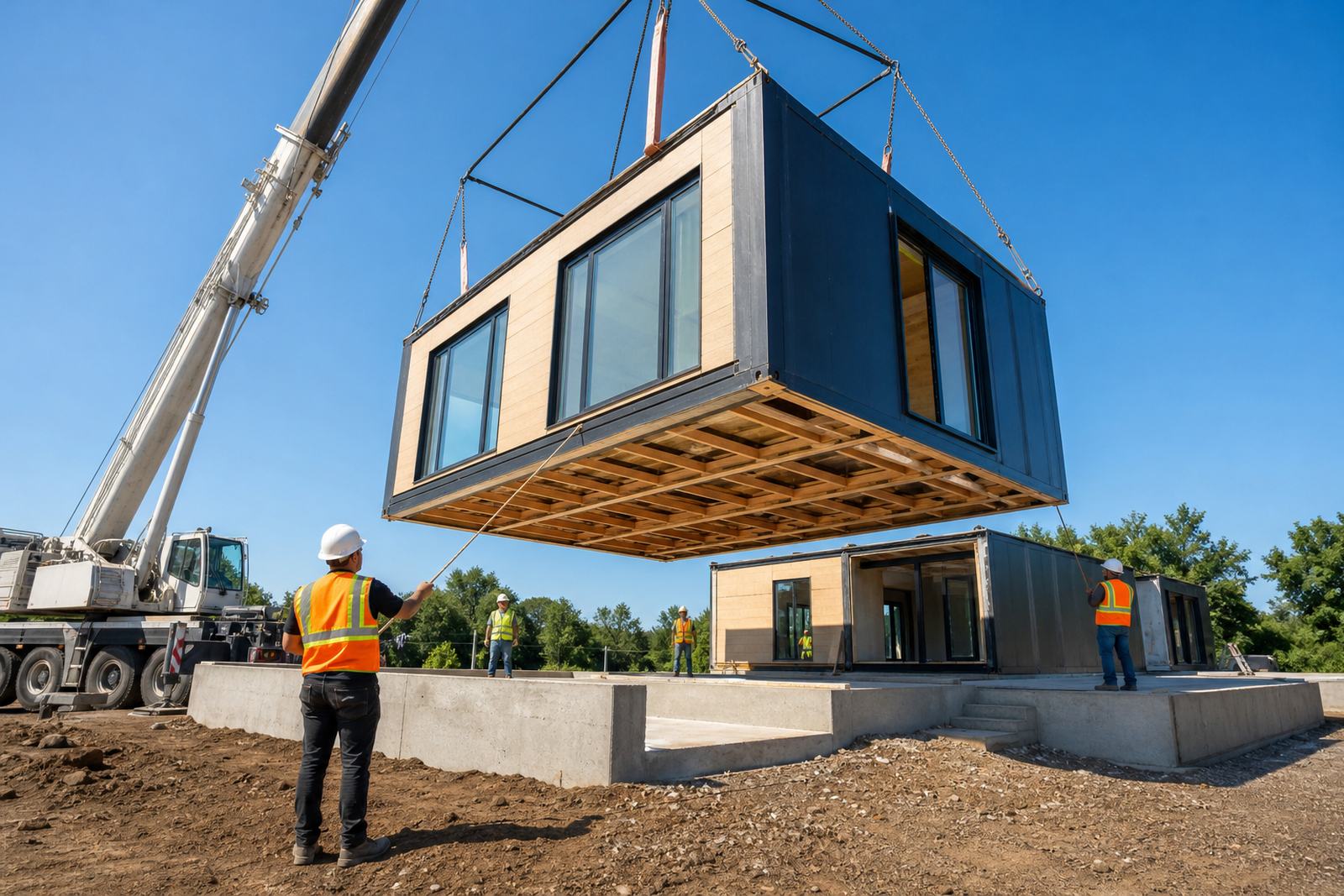
Most rented and leased units sit on blocking or temporary support systems with tie-downs, which keeps installation fast and removal simple. Purchased buildings can use the same approach or a permanent foundation, such as a perimeter foundation or slab, which is typical when the building is meant to stay. Your choice affects cost, schedule and permits, and in some jurisdictions it determines whether the building is treated as temporary or permanent.
Whichever you choose, plan for level ground, truck and crane access, drainage, and utility locations before delivery day. Site surprises are one of the most common causes of delays and change orders.
What happens at the end of a rental or lease?
Before you sign, know your three end-of-term choices: extend (often month-to-month), buy the unit if the supplier allows it, or return it, which means teardown, utility disconnection and removal. Ask who restores the site, what condition the unit must be in, and how much notice is required. Returning a unit late or damaged can add costs that weren't in the original quote.
Accounting and tax treatment also differ between leasing and buying. That's a question for your accountant, but it's worth asking early because it can change which option makes the most sense for your organization.
Why organizations choose modular in the first place
Whatever the payment structure, modular buildings are built mostly in a factory while site work and permits proceed in parallel. A widely cited McKinsey analysis found modular construction can deliver projects 20% to 50% faster than traditional methods, with potential cost savings of up to 20%, while also warning that savings depend on good logistics and design. For temporary and relocatable buildings, the time savings are even more obvious: a rental unit that already exists can be on site and in use long before a site-built structure could be designed.
Commercial modular buildings are generally built to the same building codes as site-built structures, and in many states they're inspected in the factory under a state program or third-party agency. Your local building department still handles site permits, foundations and utility connections.
Four real-world scenarios
1. A general contractor with a 14-month project
The contractor needs a superintendent office, a plan room and a crew break room for the life of the job, then nothing. Rent (or a short lease) is the clear choice: fleet trailers arrive ready to use and leave when the job ends. Ask about multi-unit pricing if the job needs several trailers.
2. A school district adding four classrooms
Enrollment projections show growth for at least three years, but a permanent building is in the long-range plan. A multi-year lease keeps capital free for the permanent project, with the option to extend. If the "temporary" classrooms are likely to stay much longer, compare against buying used.
3. A manufacturer that needs supervisor offices on the plant floor
The need is permanent and the space is inside an existing building. Buying an in-plant modular office is usually best, and modular wall systems can be reconfigured later if the plant layout changes.
4. A clinic expanding services
Long-term patient care and specialized requirements point to buying a permanent modular medical building. For short-term surge capacity, temporary leased buildings are an option.
Offices, classrooms and trailers: what's different
The rent-lease-buy logic is the same across building types, but the details differ. Job site trailers are the most standardized and the easiest to rent quickly, and many contractors never buy them at all. Classrooms carry more code requirements (occupancy, accessibility, fire alarm and restrooms), so the site work and approvals can matter as much as the building itself, and districts often lease for a set number of school years. Offices range from simple single-wides to multi-section buildings with restrooms and conference rooms, so the larger and more customized the office, the more buying makes sense. In-plant offices are almost always purchased because they are built inside your own facility. And medical buildings usually involve specialized systems that favor purchase for long-term use, with temporary leased buildings reserved for surge or swing space.
Questions to ask before you sign
- Is the quote itemized (building, delivery, installation, site work, add-ons, removal)?
- Is the unit new or used, and what condition and age is it?
- What's the minimum term, and what are the extension and early-return terms?
- Who handles permits, and what does my site need (foundation, blocking, tie-downs)?
- Are steps, ramps and ADA access included?
- Who is responsible for damage, maintenance and insurance during the term?
- For lease-to-own: how much of each payment applies to purchase, and when?
- What warranty applies to a purchased building, and who provides it?
- What is the realistic delivery date for my location?
Rent vs. lease vs. buy: a simple decision path
- Under a year? Rent.
- One to five years, standard layout? Lease (ask about lease-to-own).
- Many years, custom layout or permanent foundation? Buy (new or used).
- Not sure? Get quotes for two options and compare the total cost over your realistic timeline, including delivery, setup and removal.
We serve every state, with local pages for 100+ cities including Las Vegas, Dallas, Philadelphia, Denver and St. Louis. Find yours on the locations page.
Frequently asked questions
Is it cheaper to rent or buy a modular building?
For short needs, renting is cheaper because you avoid the purchase price. For long-term use, buying is usually cheaper overall because rental payments add up. The break-even depends on the building, term and delivery costs, so compare itemized quotes over your real timeline.
What's the difference between renting and leasing a modular building?
Renting usually means shorter, more flexible terms on standard fleet units. Leasing usually means longer terms, a lower monthly rate and sometimes more configuration options or lease-to-own programs.
Can I lease a modular building with an option to buy?
Some suppliers offer lease-to-own programs where part of your payments applies toward purchase. Availability depends on the unit and supplier, so ask when you request quotes.
What costs are included in a modular building rental?
It varies. The monthly rate covers the unit; delivery, setup, steps or ramps, skirting, furniture, security packages and end-of-term removal may be included or billed separately. Always ask for an itemized quote.
Are used modular buildings worth buying?
Often, yes, when the floor plan fits and the unit is in good condition. Used units cost less and can be available sooner than new builds. Ask about age, condition, code compliance for your state and any refurbishment.
How long does it take to get a modular building?
Rental and used units that are already built can move quickly; new custom buildings take longer because they are designed, approved and produced in a factory. Site work and permits also affect timing.
Do I need a permit for a rented modular building?
Often yes. Many jurisdictions require placement, building, electrical or plumbing permits even for temporary units. Requirements vary by location.
Can a modular building be permanent?
Yes. Permanent modular buildings sit on permanent foundations and are generally built to the same building codes as site-built construction.
How do I get an accurate quote?
Share the building type, approximate size, location, timeline and whether you'd consider renting, leasing or buying. We'll return options from our network so you can compare. Request a free quote.
Related
Sources
- McKinsey & Company, Modular construction: From projects to products (2019); summary via Construction Dive.
- Triumph Modular, Mobile office rental prices: 2026 guide and How much does a portable classroom cost? (cost factors).
- Modular Building Institute, Industry analysis.
This guide is general information, not financial, tax or legal advice. Terms, availability and requirements vary by supplier and location.