Home › Guides › Modular office building cost
Cost guide
Modular office building cost: what drives the price in 2026
The factors that move the price of a modular office up or down, how to compare quotes line by line, and practical ways to get more office for your budget, whether you buy, lease or rent.
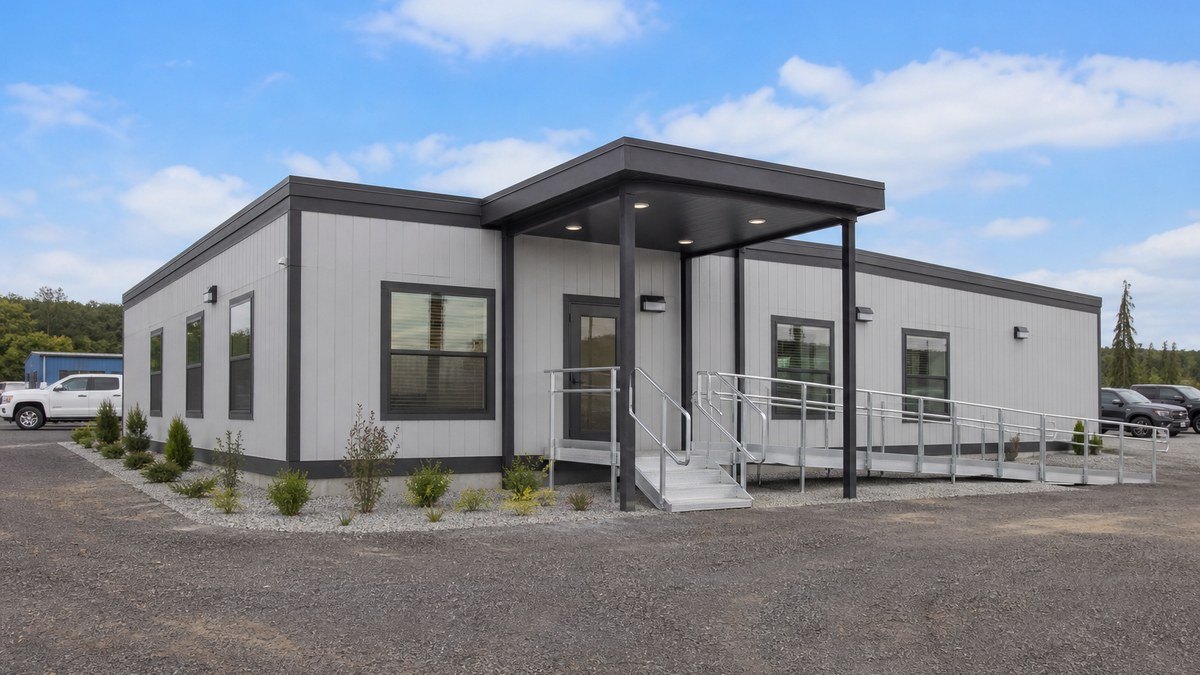
The cost of a modular office building is set by a short list of factors: the size and layout, whether the unit is new or used, the interior finishes and systems (HVAC, restrooms, data), the foundation and site work, delivery distance, permits and local code requirements, and whether you buy, lease or rent. Two offices with the same square footage can land far apart once those factors are added up, which is why a fair comparison always starts with an itemized quote rather than a single headline number.
Quick answer: There is no honest one-size price for a modular office. The building itself is only part of the bill; site work, foundations, utilities, delivery, installation, steps and ramps, permits and any end-of-term removal are often a large share of the total. Used and rental-fleet offices usually cost less up front and arrive sooner; new custom offices cost more but match your layout exactly. Independent research finds modular projects are generally cost-competitive with site-built construction and finish noticeably faster. To get a real number, share your size, location, timeline and buy/lease/rent preference and compare itemized quotes.
This guide explains each cost driver in plain language, shows how the drivers change between a single-wide sales office and a multi-section administrative building, and gives you a checklist for comparing quotes. If you already know what you need, you can request a free quote and we'll return options from our nationwide network of manufacturers, dealers and installers.
What counts as a "modular office building"?
"Modular office" covers a wide range of buildings, and the type you need is the first thing that shapes cost:
- Mobile office trailers and portable offices: single-wide units on a chassis or frame, common as sales offices, guard offices and construction site offices. Usually rented or bought used.
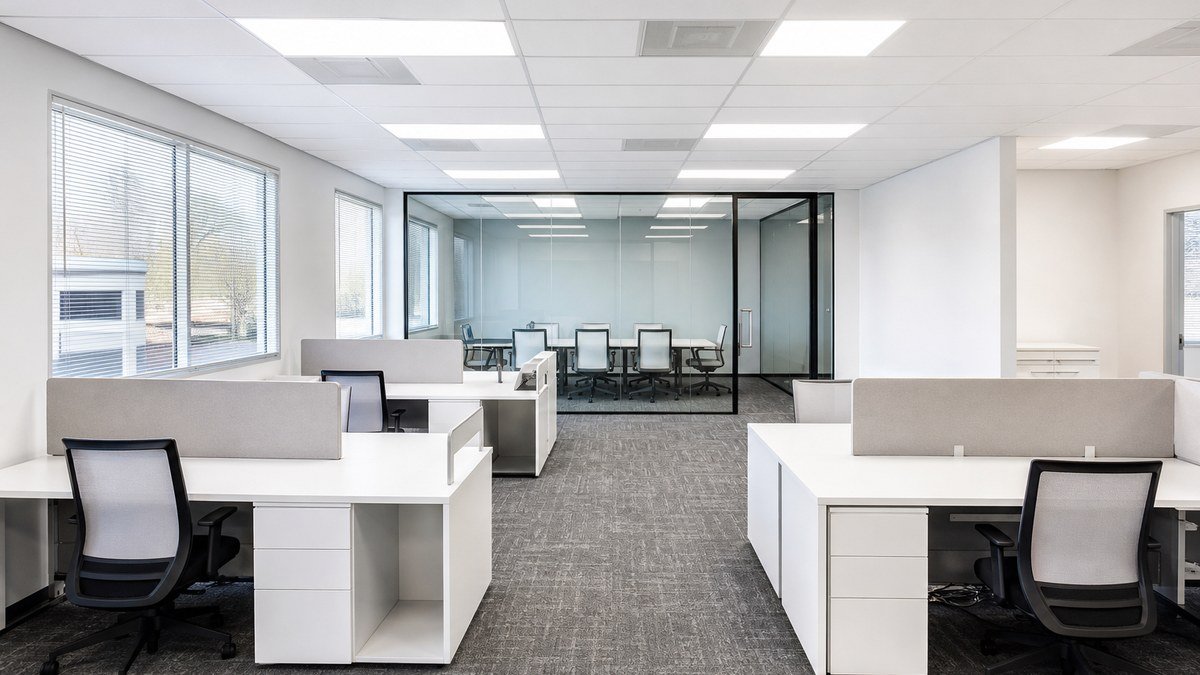
- Double-wide and multi-section modular offices: two or more factory-built sections joined on site into one building with private offices, an open area, a conference room and restrooms. Can be relocatable or permanent.
- Permanent modular office buildings: multi-section or multi-story buildings on permanent foundations, built to the same building codes as site-built offices and finished to look like conventional construction. See modular office buildings.
- In-plant offices: prefabricated wall-panel systems built inside an existing warehouse or factory. They have their own cost logic, covered in our in-plant offices page.
Relocatable units are designed to move and are typical for rentals and leases. Permanent modular buildings are designed to stay, so they carry permanent-construction costs such as foundations, full utility connections and exterior finishes that match a campus.
The cost drivers at a glance
| Cost driver | What pushes cost up | What keeps cost down |
|---|---|---|
| Size | More square footage, more sections, multi-story | Right-sizing to real headcount; standard module widths |
| Layout | Many private offices, extra walls, glass partitions, custom shapes | Open plan, standard floor plans, fewer interior walls |
| New vs. used | New, built to order | Used or refurbished units, rental fleet units |
| Finishes | Upgraded flooring, ceilings, wall panels, exterior cladding | Standard commercial finishes |
| Systems | Restrooms, multiple HVAC units, fire alarm, sprinklers, heavy data | Single HVAC zone, shared restroom building, standard electrical |
| Site work & foundation | Grading, paving, permanent foundations, long utility runs | Level, accessible sites near existing utilities; blocking and tie-downs |
| Delivery & installation | Long distances, oversize permits, escorts, cranes, tight urban sites | Nearby inventory, simple truck access |
| Codes & climate | High snow, wind or seismic design loads; strict energy codes | Mild climate; standard design loads |
| Term (rent/lease) | Short terms, add-ons billed monthly | Longer terms, bundled delivery and removal |
1. Size and number of sections
Total cost rises with square footage, but not in a straight line. Every building has fixed costs (engineering, transport set-up, crane time, permits, utility connections) that are spread across the floor area, so smaller buildings tend to cost more per square foot than larger ones, and cost per square foot often falls as projects get bigger. Each additional section also adds transport, a set and a "marriage line" where sections join, so a building made of fewer, larger modules can be more efficient than one made of many small pieces.
Multi-story modular offices save land and can make sense on tight sites, but stacking adds stairs, structural connections, fire separation and often a crane with more reach. The trade-off is usually worth it where land is expensive, such as dense parts of New York City or San Francisco, and less necessary on a large suburban lot.
2. Layout and interior build-out
Inside the shell, walls and doors are where budgets quietly grow. Every private office adds partitions, a door, a light switch, outlets and sometimes a separate HVAC supply. Glass walls, sound-insulated partitions, extra doors and cable raceways all add cost. An open-plan office with a few enclosed rooms (a manager's office, a conference room, a break room) is usually the most economical layout per person.
Standard floor plans from a manufacturer's catalog are generally less expensive than fully custom designs because the engineering and approvals already exist. If you need a custom layout, ask whether a standard plan can be modified rather than starting from scratch.
3. New, used or rental fleet
This is one of the biggest swings in both price and schedule:
- New: built to order, so you choose layout, finishes and systems. Higher cost and a longer lead time because the building is designed, approved and produced in a factory.
- Used or refurbished: lower cost and often faster, but limited to what's available. Check age, condition, roof, floor, HVAC and whether the unit's approvals work for your state and intended use.
- Rental or lease fleet: lowest up-front cost, standard layouts, and delivery, setup and removal handled as part of the agreement. Best for short or uncertain needs. See modular building rental & leasing.
For a deeper comparison of payment options, read our guide to whether you should rent, lease or buy a modular building.
4. Finishes, materials and systems
Interior and exterior materials vary widely. Vinyl-covered gypsum or fiberglass-reinforced panels cost less than upgraded wall systems; fire-rated or sound-rated assemblies cost more. On the outside, basic metal or painted siding costs less than wood-look, brick-look or stucco finishes that match an existing campus.
Mechanical, electrical and plumbing systems are a major line item:
- Restrooms add fixtures, plumbing, ventilation and sewer or septic connections. A small office sometimes uses a separate restroom trailer or nearby facilities instead.
- HVAC grows with size and the number of rooms; larger buildings may need several units.
- Life safety such as fire alarm or sprinklers may be required depending on size, occupancy and local code.
- Data and security (structured cabling, access control, cameras) are often added on site and priced separately.
5. Site work and foundation
Site work is the cost line people most often leave out when they compare a modular price with a site-built price, and it can be a significant share of the total. It includes:
- Clearing, grading and drainage so the building sits level and stays dry
- Access for trucks and, if needed, a crane
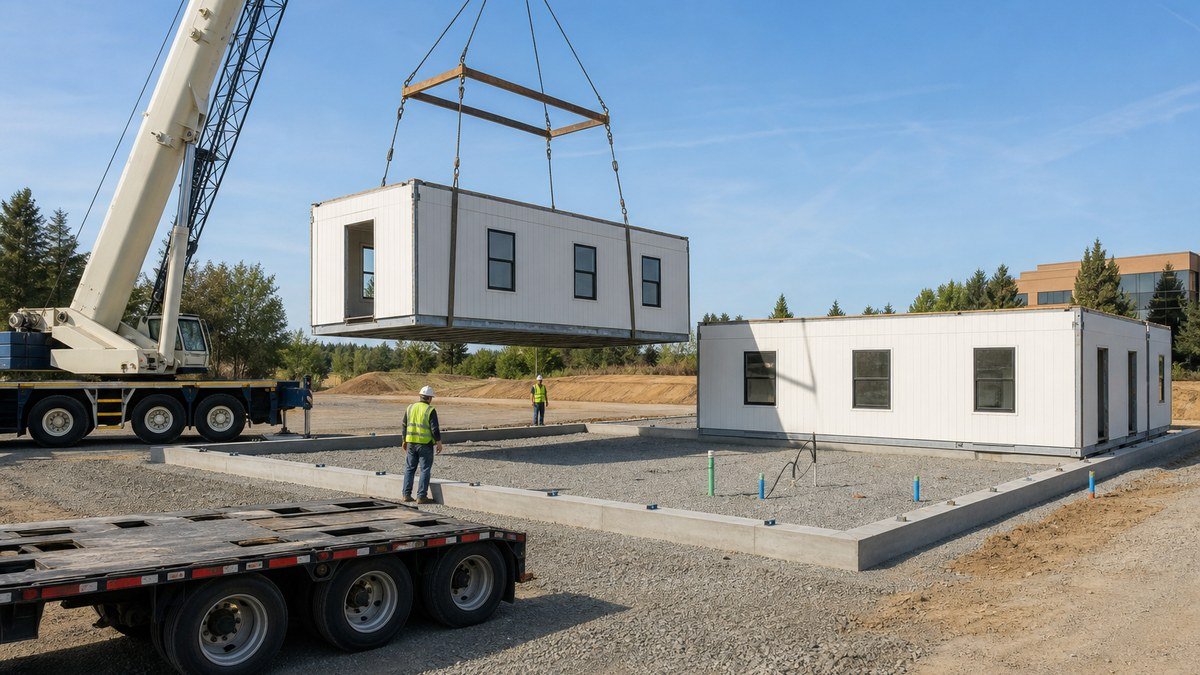
- The foundation: blocking and tie-downs for relocatable units, or a perimeter foundation or slab for permanent buildings
- Utility runs for power, water, sewer or septic, gas and data
- Steps, landings, ADA ramps, walkways and parking
A level lot with utilities close by is the cheapest place to put a modular office. A sloped site, a long trench to the nearest sewer line, or a requirement to match a campus with permanent landscaping and paving can change the budget more than any upgrade inside the building.
6. Delivery, transport and installation
Modules travel by truck, so distance from the factory or fleet yard matters, and oversize loads may need state permits, route surveys and escort vehicles. Tight urban streets, overhead lines and limited staging space add coordination time and sometimes a larger crane.
Installation (setting, leveling, joining sections, finishing the seams and connecting systems) is its own cost. For in-plant modular offices, one manufacturer notes that installation is typically billed as a share of material cost, roughly 30% to 50% depending on the supplier, which shows how meaningful labor can be relative to the building itself. Asking for delivery and installation as separate lines makes it easier to compare suppliers who are located at different distances from your site.
7. Permits, codes and local climate
In most states, commercial modular buildings are built to the same building codes as site-built construction and are approved through a state modular program or a third-party plan review and inspection agency at the factory. A few states also participate in an interstate compact, the Interstate Industrialized Buildings Commission, so approvals can be recognized across member states. The city or county building department still handles the site: zoning, the foundation, utility connections and the final inspection.
Climate changes the building itself:
- Snow load and cold: stronger roof structure, more insulation and cold-rated HVAC in places like Minneapolis, Denver, Buffalo and Cleveland.
- Wind and hurricanes: wind-rated construction, engineered anchorage and sometimes impact-rated openings in hurricane zones such as Miami and Houston.
- Seismic: foundation and anchorage designed for the local seismic category in much of California and the Pacific Northwest, including Los Angeles and Seattle.
- Heat: larger cooling capacity, reflective roofing and shaded entries in places like Phoenix and Las Vegas.
Energy codes also differ by state and affect insulation, windows and HVAC efficiency. None of these are optional extras: the building must meet the design loads and codes where it will sit, so a fair quote always reflects the actual site.
8. Buy, lease or rent
How you pay changes the shape of the cost more than the total:
| Rent | Lease | Buy | |
|---|---|---|---|
| Up-front | Lowest: delivery, setup, add-ons | Low to moderate | Highest: purchase price plus site work |
| Monthly | Highest per month | Lower with longer terms | None after purchase (utilities, insurance, upkeep continue) |
| End of term | Teardown and return | Extend, buy (if offered) or return | Keep, relocate or resell |
| Best when | Under a year or uncertain | About 1–5 years, standard layout | Many years, custom layout, permanent use |
Accounting and tax treatment of leased and purchased buildings differ, so ask your accountant early. It can change which option costs your organization less.
How modular compares with site-built office construction
Modular is not automatically cheaper, but research suggests it is usually competitive on cost and clearly faster:
- A widely cited McKinsey & Company analysis found modular construction can deliver projects 20% to 50% faster than traditional methods, with potential cost savings of up to 20%, while noting that savings depend on design and logistics.
- A U.S. Department of Energy–funded field study of multifamily projects (2020–2023), summarized by the National Institute of Building Sciences, found modular projects finished about 30% faster on average and cost roughly 5% less overall than comparable site-built projects, mainly from shorter schedules and lower jobsite overhead. Offsite fabrication made up roughly 40% to 60% of the total work and ran at the same time as site work.
- The same NIBS summary notes that modular still makes up less than 6% of commercial construction in the U.S. and Canada, and that financing and a lack of standards remain barriers.
Those studies covered larger projects, so treat them as direction rather than a promise for a single office. The practical takeaway: the time savings are reliable because the factory and site work run in parallel, and the cost savings depend on keeping the design simple and the site work under control. For temporary offices, a fleet unit that already exists can be in use long before a site-built office could even be designed.
Three cost scenarios (no made-up numbers)
1. A single sales office on a dealership lot
A small office with two desks and a counter. Size is small, so fixed costs (delivery, setup, permits) are a big share of the total. A used or rental unit with standard steps and a ramp is usually the lowest-cost route; the biggest variables are the distance to the nearest unit and whether utilities are already on the lot.
2. A double-wide office for a regional team
Six private offices, an open area, a conference room and two restrooms. Restrooms, HVAC zones and the number of interior walls drive the building cost; the utility runs and foundation drive the site cost. A standard floor plan with minor changes will usually beat a fully custom plan on both price and schedule. Leasing for three to five years is common when the long-term plan is uncertain.
3. A permanent two-story administrative building
A multi-section building on a permanent foundation with finishes matching an existing campus. Engineering, stairs, fire separation, life-safety systems, crane time and exterior finishes all add cost, but the factory schedule can still shorten the overall project compared with site-built construction. This is where modular competes directly with conventional construction, and where an itemized comparison matters most.
A line-by-line quote worksheet
Ask every supplier to price the same scope, then fill in this worksheet. If a line is missing from a quote, ask whether it's excluded or included elsewhere.
| Line item | What to confirm |
|---|---|
| Building | Size, number of sections, new or used, floor plan, finishes, HVAC, restrooms |
| Engineering & approvals | State or third-party approval, design loads for your site, stamped drawings |
| Delivery | Distance, oversize permits, escorts, return trip (rent/lease) |
| Installation | Set, level, join sections, seams, crane if needed |
| Foundation | Blocking and tie-downs, or permanent foundation; who designs it |
| Site work | Grading, drainage, paving, access, landscaping |
| Utilities | Electrical service, water, sewer or septic, gas, data; licensed trades |
| Access | Steps, landings, ADA ramp, handrails, canopies |
| Add-ons | Skirting, furniture, security package, fire alarm, IT |
| Permits & fees | Building, placement, electrical, plumbing; who pulls them |
| End of term | Teardown, removal and site restoration (rent/lease) |
| Ongoing | Utilities, insurance, maintenance, damage waiver |
Ten ways to get more office for your budget
- Start with a standard floor plan and modify it rather than designing from scratch.
- Use open-plan space with a few enclosed rooms instead of many private offices.
- Consider used or refurbished units when the layout works and the condition checks out.
- Match the term to reality. "Temporary" offices often stay longer than planned; compare leasing with buying used.
- Pick the site carefully. Level ground near existing utilities saves money before the building arrives.
- Bundle units. Several buildings delivered and set in one mobilization usually cost less per unit than separate trips.
- Decide early on restrooms. Built-in restrooms add plumbing and sewer work; sometimes nearby facilities or a separate unit work better.
- Lock the scope before production. Changes after factory production starts are expensive; the DOE-funded study noted modular contracts were often locked months ahead with few change orders.
- Ask for itemized quotes so you can see exactly where the money goes and compare suppliers fairly.
- Get more than one option. A quote for both a new and a used building, or a lease and a purchase, shows the real trade-offs.
How long does it take, and does speed affect cost?
Time is money on most projects, and schedule is where modular earns its reputation. Fleet and used offices that already exist can often be delivered much faster than a new building, subject to availability, permits and site readiness. New modular offices are produced in a factory while the site is prepared, so permitting, site work and production overlap instead of happening one after another. Your schedule depends on design, approvals, factory capacity and site work, and a good quote should include a realistic timeline for your location rather than a generic promise.
Where we help
We match your project with manufacturers, dealers, rental fleets and installers in our network, then return options to buy, lease or rent. Office demand is especially strong in markets such as St. Louis, Philadelphia, Chicago, Atlanta, San Antonio, Kansas City and Dallas, and we serve every state in between. Find your city on the locations page. Need office space for a school campus? See our guide to portable classrooms for school districts. Need something unusual? We also source custom and specialty structures.
Frequently asked questions
How much does a modular office building cost?
It depends on size, layout, new or used, finishes, restrooms and HVAC, foundation and site work, delivery distance, local code requirements and whether you buy, lease or rent. Because site work and installation can be a large share of the total, the only reliable number is an itemized quote for your site.
Is a modular office cheaper than a site-built office?
Often it is competitive rather than dramatically cheaper. Research summarized by McKinsey and the National Institute of Building Sciences found modular projects can cost somewhat less and finish substantially faster, mainly because factory production and site work happen at the same time. Savings depend on a simple design and well-managed site work.
Why is the cost per square foot higher for small modular offices?
Every building has fixed costs such as engineering, transport, crane time, permits and utility connections. In a small office those costs are spread over fewer square feet, so the cost per square foot is higher than in a larger building.
What is usually not included in a modular office price?
Commonly excluded or separately priced items include site work, the foundation, utility connections, steps and ramps, skirting, furniture, permits, data cabling and, for rentals, end-of-term removal. Always ask for an itemized quote.
Is a used modular office worth it?
Often, yes, when the floor plan fits and the unit is in good condition. Used offices cost less and can be available sooner. Check age, roof, floor, HVAC and whether the unit's approvals work for your state and intended use.
Should I lease or buy a modular office?
Lease for roughly one to five years of predictable use without a large up-front cost; buy for long-term or permanent use and custom layouts. Compare the total cost over your realistic timeline, including delivery, setup and removal.
Do modular offices need permits?
Usually, yes. Permanent buildings need building permits, and many temporary units still need placement, electrical or plumbing permits. The building is typically approved at the factory under a state or third-party program, while the local building department handles the site.
Does climate affect modular office cost?
Yes. Buildings are designed for local snow, wind and seismic loads and the state energy code, which can add structure, insulation, anchorage or HVAC capacity in harsher climates.
How do I get an accurate modular office quote?
Share the approximate size or headcount, layout needs, location, timeline and whether you'd consider buying, leasing or renting. We'll return options from our network so you can compare. Request a free quote or call (702) 738-2218.
Related
Sources
- McKinsey & Company, Modular construction: From projects to products (2019); summary via Construction Dive.
- National Institute of Building Sciences, The opportunities and challenges of modular construction (2024), summarizing a U.S. DOE–funded field study.
- Modular Building Institute, Modular multi-family construction: a field study (2024).
- Allied Modular, How much does a modular office building cost? (cost factors; installation as a share of material cost).
- Interstate Industrialized Buildings Commission, FAQ.
This guide is general information, not financial, tax or legal advice. Pricing, availability, codes and requirements vary by supplier and location.