Home › Guides › Modular building leasing
Leasing guide
Modular building leasing: lease terms, lease-to-own options and a contract checklist (2026 guide)
How a modular building lease works, how it differs from a rental, what the lease agreement should say about term, delivery, setup, damage, insurance and return, when lease-to-own makes sense, how leases are treated for accounting and taxes, and what drives the monthly cost.
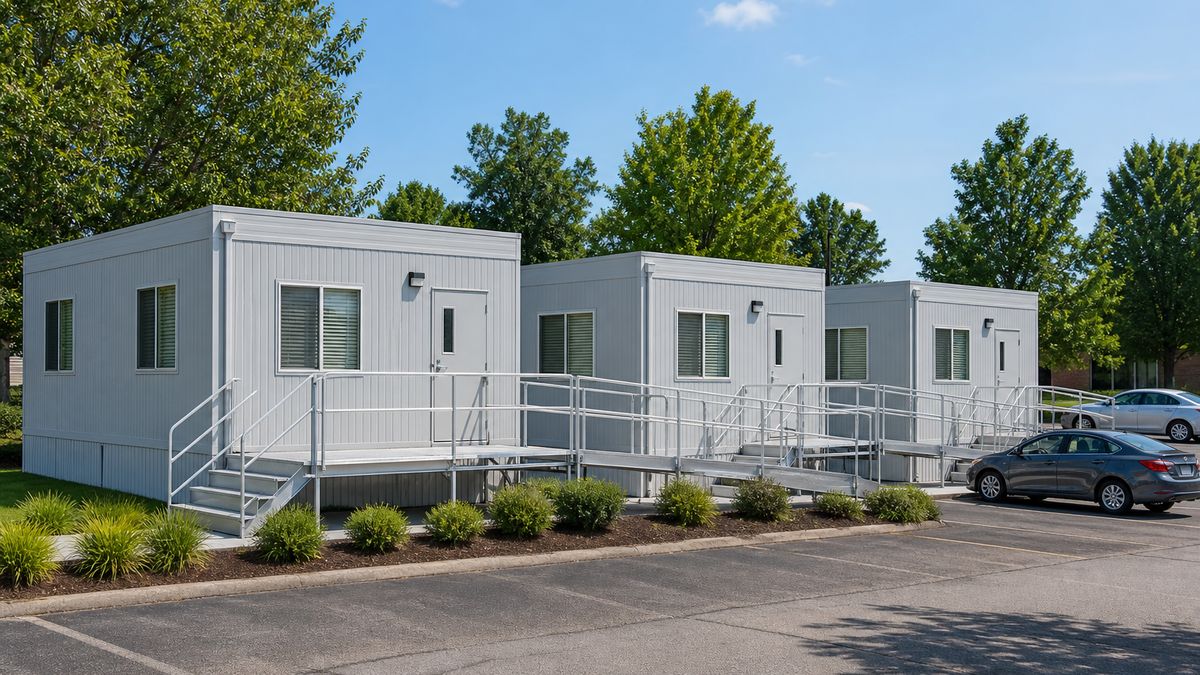
Modular building leasing means paying a monthly amount to use a factory-built office, classroom, clinic, restroom building or other modular structure on your site for a set term, while the leasing company keeps ownership. At the end of the term you return the building, extend the lease, or, if the agreement allows it, buy the building. Leasing is the usual choice when you need space for months or a few years, want to keep cash for your core business, or aren't yet sure how long the need will last.
Quick answer: To lease a modular building, define the use, size, location and how long you need it; get itemized quotes that separate the monthly lease rate from one-time charges (delivery, installation, ramps or steps, skirting, utility hookups, teardown and return freight); and read the lease terms carefully before you sign. The clauses that matter most are the initial term and what happens when it ends (month-to-month holdover or renewal), who pays for site preparation and permits, the damage and insurance requirements, the return condition and notice period, early-termination charges, and whether there is a purchase option. For terms longer than 12 months, talk to your accountant: under current U.S. lease accounting rules, most leases longer than a year go on the balance sheet.
This guide is built for facility managers, school districts, contractors, healthcare operators and business owners comparing modular building lease offers. It covers lease vs. rent vs. buy, the parts of a lease agreement, lease-to-own and purchase options, accounting and tax basics, cost factors, a step-by-step leasing process, real-world scenarios and a contract checklist. We supply leased modular buildings through our nationwide network of manufacturers, dealers and installers; see our modular building rental and leasing page or request a free quote.
Lease vs. rent vs. buy: what's the difference?
People use "rent" and "lease" interchangeably, and many suppliers do too. In practice the industry tends to draw a line based on how long you keep the building and how the contract is written:
| Option | Typical use | Contract style | Ownership at the end | Best when |
|---|---|---|---|---|
| Rental | Short projects, events, swing space during a renovation | Short or open-ended term, often month-to-month after a minimum | Building goes back to the supplier | You need space quickly and for a limited time |
| Operating lease | Multi-month or multi-year needs: offices, classrooms, clinics, project headquarters | Fixed initial term, then renewal or holdover | Building goes back (or you extend) | The need is real but not permanent, and you want predictable payments |
| Lease-to-own / lease-purchase | Needs that may become permanent | Lease with a purchase option or a planned transfer of title | You may buy, often with part of the payments credited | You want to keep the option to own without paying everything up front |
| Purchase (cash or financed) | Long-term or permanent space | Sales contract, sometimes with third-party financing | You own it from the start | You'll use the building for many years or need permanent construction |
For a deeper look at the overall decision, read our rent, lease or buy a modular building guide. For short projects, our temporary buildings for rent guide covers rental options in detail. This article focuses on the lease itself: what the agreement says and how to compare offers.
What kinds of modular buildings can you lease?
Most relocatable modular buildings, meaning buildings designed to be transported and reused at more than one site, can be leased. The Modular Building Institute describes relocatable buildings as structures that may stay on a site for anywhere from a few months to several years or longer before being moved and reused. Common leased building types include:
- Modular offices, from single-section offices to multi-section office complexes with private offices, open work areas, conference rooms and restrooms. See modular offices and commercial spaces.
- Construction trailers and mobile offices for job site headquarters. See construction trailers and mobile offices and our construction office trailer sizes guide.
- Portable and modular classrooms for enrollment growth or swing space during school renovations. See portable classrooms and education buildings.
- Modular clinics and healthcare buildings for temporary capacity, testing sites or space during hospital renovations. See healthcare and medical facilities.
- Restroom and shower buildings, including ADA-accessible restroom and shower combinations for job sites, campuses, events and workforce sites.
- Industrial and storage buildings such as yard offices, break rooms, tool rooms and secure storage. See industrial and storage buildings.
- Specialty buildings like guard houses, break rooms, labs and command posts. See custom and specialty structures.
In-plant offices built inside your own warehouse are usually purchased rather than leased, as we explain in our in-plant offices guide. Permanent modular buildings set on permanent foundations are also normally bought.
Why businesses and schools lease modular buildings
- Lower up-front cash. Instead of paying for the building, you pay a monthly lease rate plus one-time setup and return charges.
- Matching the term to the need. A two-year project or a three-year enrollment bump doesn't require buying a building you'll have to sell later.
- Speed. Relocatable buildings are built in a factory, and existing units can sometimes be refurbished and reconfigured rather than built from scratch. A widely cited McKinsey analysis found modular construction can accelerate projects by 20% to 50%, and a National Institute of Building Sciences summary of a U.S. Department of Energy-funded field study reported modular projects about 30% faster, with 40% to 60% of the work done off site. Actual timing depends on the building, permits and site work.
- Flexibility. Many leases allow extensions, and buildings can often be added or removed as needs change.
- Maintenance support. Many lease agreements make the leasing company responsible for certain repairs to the building and its systems, while the customer covers damage and routine care. Read the warranty and maintenance clauses closely, because the split varies.
- Budget treatment. Some organizations prefer operating funds for leases rather than capital budgets for purchases. School districts and public agencies often have specific rules, so involve your finance office early.
The parts of a modular building lease agreement
A modular building lease usually combines a quote or order (building, price, term, site) with standard terms and conditions. The standard terms are where most surprises live, so read them before you sign. These are the clauses to look for:
| Clause | What it covers | What to check |
|---|---|---|
| Equipment description | The building(s), size, floor plan, features, ramps, steps, skirting, furniture and any add-ons | Is everything you were quoted listed? Are accessories leased or sold? |
| Initial term and start date | How long the lease runs and when billing begins (often on delivery) | Does billing start at delivery or at occupancy? How are partial months billed? |
| Renewal and holdover | What happens when the initial term ends | Many leases roll to month-to-month until the building is returned, and the lessor may be allowed to change rates. Negotiate renewal terms up front if you might stay longer. |
| One-time charges | Delivery, installation, blocking and leveling, tie-downs, ramps or steps, skirting, teardown and return freight | Are return charges quoted now or "at current rates" later? Get them in writing. |
| Site preparation | Who prepares the pad, access road, utilities and drainage | Usually the customer's responsibility. Confirm the site specs the installer needs. |
| Permits and approvals | Building, zoning, electrical, plumbing and fire permits | Who applies, who pays, and what happens to the schedule if a permit is delayed? |
| Maintenance and repairs | What the lessor fixes and what you fix | HVAC filters, plumbing, doors, roof leaks: who responds, and how fast? |
| Risk of loss and damage | Who is responsible if the building is damaged or destroyed | Lease terms commonly place risk of loss on the customer from delivery until pickup. |
| Insurance | Property and liability coverage required from the customer | Required limits, naming the lessor as loss payee or additional insured, and certificates before delivery. |
| Damage waiver | An optional program some lessors offer that limits your responsibility for certain damage | What's excluded (often negligence, vandalism or specific events), the deductible, and whether it replaces insurance. |
| Taxes and fees | Sales or use tax on lease payments, personal property tax, permit and registration fees | Which taxes apply in your state and whether they're included in the quote. |
| Return condition and notice | How much notice you must give and how the building must be left | Notice period, utility disconnection, cleaning, removing your property, and how wear and tear is judged. |
| Early termination | What you owe if you end the lease early | Is there a fee, a formula, or a requirement to pay the remaining term? |
| Purchase option | Whether you can buy the building, when, and at what price or formula | Is there a rental credit toward purchase? Is the price fixed or "fair market value"? |
| Relocation | Whether you can move the building to another site during the lease | Usually requires the lessor's consent and new setup charges. |
Lease terms and what happens at the end
The initial term is set in your agreement. Short terms suit construction projects and swing space; multi-year terms suit classrooms, clinics and offices that will be needed for several budget cycles. Longer terms can lower the monthly rate in some offers because one-time costs are spread out, but they also commit you for longer, so weigh flexibility against rate.
When the initial term ends, you generally have three choices:
- Return the building. Give the required written notice, prepare the building for pickup (clear access, disconnect utilities through licensed trades, remove your belongings, follow any plumbing winterizing or flushing steps), and pay the teardown and return charges.
- Extend or renew. Sign a renewal at agreed terms, or let the lease roll month-to-month if the agreement allows it. Check whether rates can change during holdover.
- Buy the building. If your lease includes a purchase option, exercise it according to its terms. If it doesn't, you can still ask; many lessors sell used units, as covered in our modular buildings for sale guide.
Put a reminder in your calendar well before the notice deadline. Missing it can mean extra months of billing.
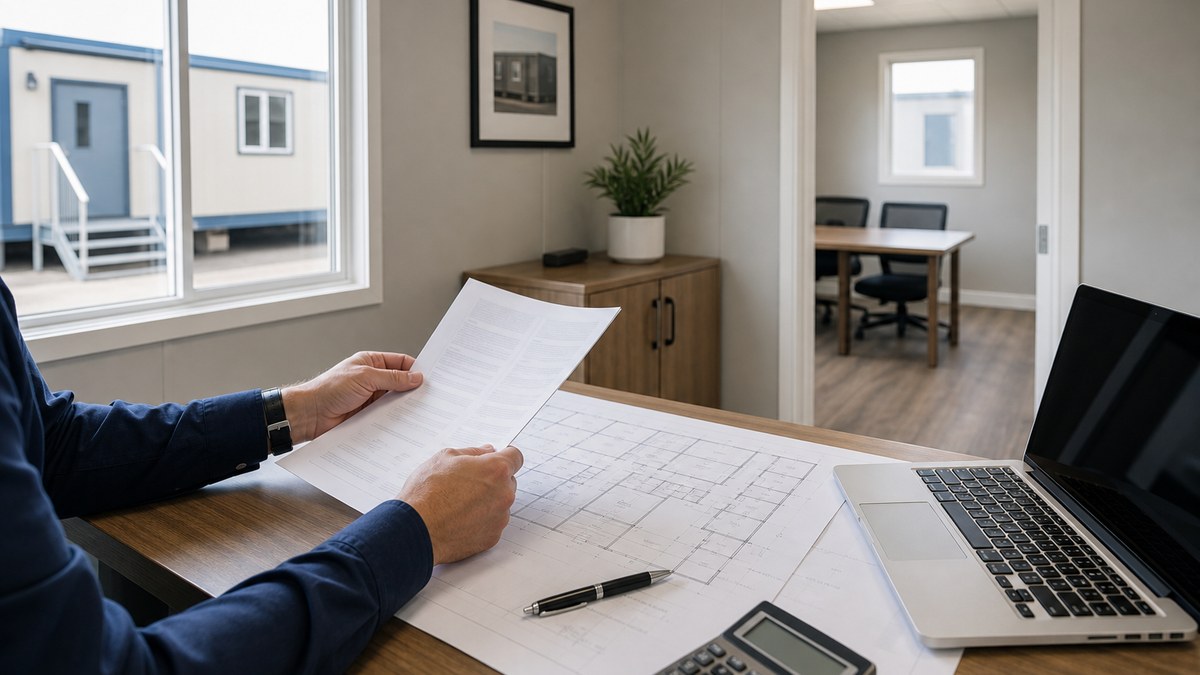
Lease-to-own and purchase options
A lease-to-own (or lease-purchase) arrangement lets you lease a modular building now and buy it later. It's a good fit when a "temporary" need may turn permanent: a school that isn't sure a growth wave will last, a clinic testing a new location, or a business that needs space now but wants time to decide. Common structures include:
- Fair market value (FMV) option: you may buy at the building's market value when the option is exercised. Payments stay lower, but the buyout price is unknown until then.
- Fixed-price option: the buyout price (or a formula) is written into the lease, so you know the cost of owning in advance.
- Rental credit: a share of lease payments made is credited toward the purchase price if you buy within a set period.
- Nominal buyout: you can buy for a token amount at the end. This is economically closer to a financed purchase than a lease, which matters for taxes and accounting.
Before choosing lease-to-own, also price an outright purchase with financing. Depending on the term and buyout, buying from the start can cost less overall, while leasing keeps your options open. If you might move the building, ask whether it's designed and labeled for relocation and whether it can be relabeled or approved in another state; our mobile buildings guide explains state labels and how relocatable buildings are approved.
Accounting and tax basics for modular building leases
Leasing can look simple on the invoice, but the accounting and tax treatment depends on how the agreement is written. This section is general information only; confirm your situation with your accountant or tax advisor.
Lease accounting (ASC 842)
Under U.S. GAAP lease accounting (FASB ASC 842), most leases are recorded on the lessee's balance sheet as a right-of-use asset and a lease liability. There is a practical exception for short-term leases: a lease with a term of 12 months or less that does not include a purchase option the lessee is reasonably certain to exercise. If a company elects the short-term lease exemption for that class of asset, it can expense the payments on a straight-line basis instead of putting the lease on the balance sheet. If the term is later extended beyond 12 months, or a purchase becomes reasonably certain, the lease generally has to be recognized on the balance sheet from that point. That is why the length of the initial term and any purchase option can matter to your finance team, not just the monthly rate.
Taxes: lease or conditional sale?
For federal income tax, the IRS says that if an agreement is a true lease, business users can generally deduct the lease payments as rent. If it's really a conditional sales contract, you're treated as the buyer and recover the cost through depreciation instead. The IRS says it depends on the parties' intent as shown in the agreement, and no single test always applies. Signs of a conditional sale include part of each payment building an equity interest, getting title after a set number of payments, payments well above fair rental value, a buyout at a nominal price compared with the property's value, and payments designated as interest. Lease-to-own structures are where this question comes up most, so get advice before signing.
Sales and property taxes
Many states tax leases of tangible personal property, and some localities charge personal property tax on equipment, including relocatable buildings. Whether the lessor or the customer pays, and how it's billed, varies by state and by contract. Ask each supplier whether taxes are included in the quote.
Codes, permits and site requirements for leased buildings
A leased building still has to meet the codes where it's placed. The Interstate Industrialized Buildings Commission notes that modular buildings must meet the codes adopted where they are sited, and many states run modular programs with state labels or insignia. Relocatable buildings are addressed in the International Building Code, and the Modular Building Institute helped write the IBC section on relocatable buildings; for existing relocatables the IBC points to the International Existing Building Code. Some jurisdictions treat short stays differently: for example, the City of Ann Arbor, Michigan, notes that under the Michigan Building Code a temporary structure is one in place for less than 180 days, and that permits are required above certain sizes. Your city or county building department makes the call.
Plan for these before delivery:
- Zoning: whether a temporary or modular building is allowed on the parcel, setbacks, and any time limit on temporary use.
- Building permit: foundation or blocking, anchoring, ramps, steps and decks, and egress.
- Utilities: electrical service and permits, water and sewer or holding tanks, and data.
- Fire and life safety: separation from other buildings, fire extinguishers, alarms, and fire lane access.
- Accessibility: ramps, accessible entrances and restrooms where required. Under the 2010 ADA Standards, construction trailers directly associated with construction are exempt from certain requirements, but offices, classrooms and clinics used by staff or the public generally are not.
- Site work: a level, well-drained, compacted pad, truck access for delivery and pickup, and room for the installation equipment.
Site preparation, permits and utility work are usually outside the lease rate, so include them in your budget.
What drives the cost of leasing a modular building
We don't publish lease rates, because quotes depend on your building, term and site. These are the factors that move modular building lease quotes the most:
- Building size and number of sections. Larger and multi-section buildings cost more to lease, deliver and install.
- Building type and features. Restrooms, plumbing, upgraded HVAC, clinical finishes, classroom acoustics and security features add cost.
- New vs. existing fleet units. Refurbished units already in a lessor's inventory can differ in rate and availability from new builds.
- Term length. Longer terms spread one-time costs; shorter terms carry more of them per month.
- Delivery distance. Freight from the nearest available building and escort or permit needs for wide loads.
- Installation. Blocking, leveling, tie-downs, crane needs, joining multi-section units, and site access.
- Accessories. Ramps, steps, decks, skirting, awnings, furniture and appliances.
- Site work and utilities. Pad, gravel, drainage, electrical service, water, sewer and data, usually by the customer.
- Permits and engineering. Drawings, foundation or anchoring plans, permit fees and inspections.
- Insurance and damage waiver. Your property and liability coverage, or the cost of an optional damage waiver.
- Taxes. State and local sales, use and property taxes.
- Return costs. Teardown, return freight, cleaning and any repairs beyond normal wear.
How the modular building leasing process works
- Define the need. Use, headcount, rooms, restrooms, special equipment, and how long you expect to need the space.
- Check the site. Pad location, access, utilities, zoning and setbacks. Photos and a site plan help suppliers quote accurately.
- Request quotes. Ask for itemized pricing that separates the monthly rate from one-time charges, plus the standard lease terms.
- Compare and negotiate. Term, renewal rates, return charges, maintenance, damage terms and purchase options are often negotiable.
- Finalize drawings and permits. The supplier provides floor plans and setup details; you or your contractor pull permits where required.
- Prepare the site. Pad, gravel, drainage and utility stubs ready before delivery.
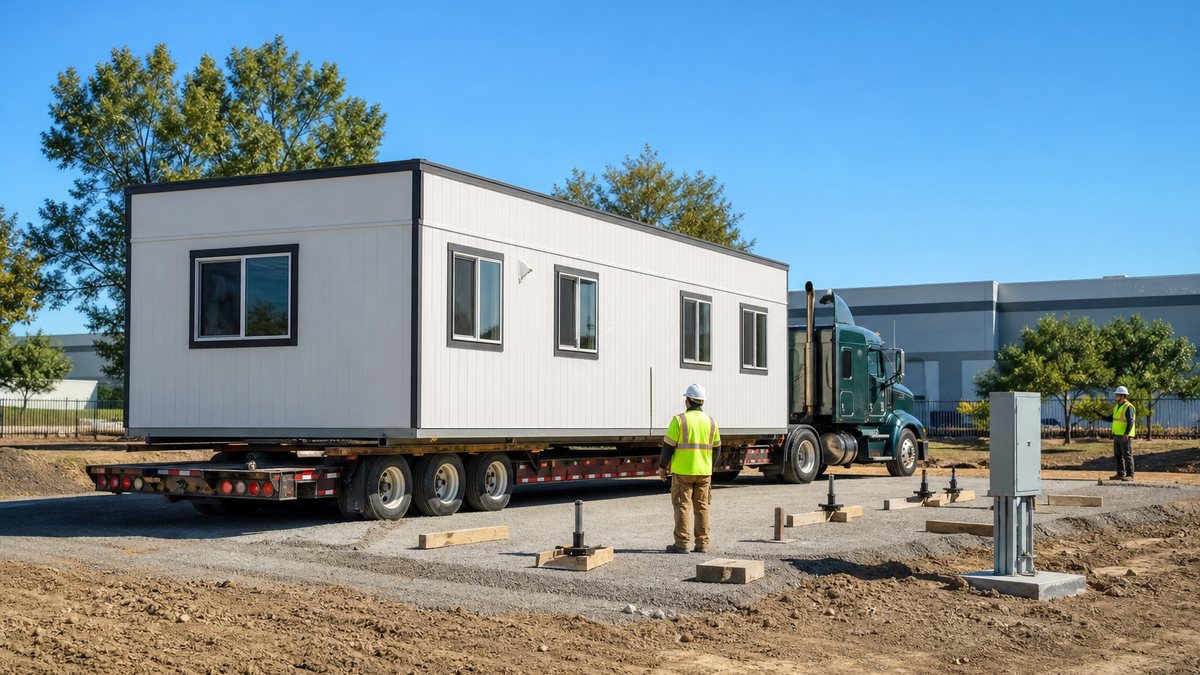
- Delivery and installation. The building is delivered, set, blocked, leveled and anchored; sections are joined; ramps, steps and skirting are installed.
- Utility hookups and inspection. Licensed trades connect power, water and sewer; inspections are completed and the building is handed over.
- Use and maintain. Follow the maintenance responsibilities in the lease and report issues promptly.
- Renew, buy or return. Decide before the notice deadline, then follow the return or purchase steps in the agreement.
Modular building leasing for industrial use, schools and healthcare
Industrial and warehouse sites
Manufacturers, distribution centers and energy or utility yards lease modular offices, break rooms, locker rooms and training buildings outside the plant, especially during expansions or when a contract adds shifts. Ask about durable flooring, door hardware, power for equipment and the insurance requirements for buildings in active yards. Our industrial modular buildings guide covers occupancy groups and storage buildings.
Schools and colleges
Districts often lease portable classrooms for enrollment growth or as swing space during renovation, then return them or convert to purchase if the need lasts. Board approval, state classroom programs and procurement rules can lengthen the timeline, so start early. See our portable classrooms lease vs. buy guide and the modular school buildings guide.
Healthcare
Hospitals and clinics lease modular buildings for overflow, testing, staff space and swing space during renovations. Clinical uses bring extra requirements for occupancy, ventilation, infection control and licensing, covered in our modular medical clinic guide.
Restroom and shower buildings
ADA-accessible restroom and shower combination buildings are often leased for job sites, campuses, events and remote workforce sites. Plumbing connections (or holding tanks), hot water, ventilation and accessible routes from parking or work areas need to be planned with the site.
Four modular building leasing scenarios
1. A contractor needs a project headquarters for a multi-year build
A double-wide or multi-section office with a conference room and restroom is leased for the length of the project, with a renewal option in case the schedule slips. Return freight is quoted at signing, and the lease is set to roll month-to-month rather than auto-renew for a full year.
2. A school district isn't sure the enrollment growth will last
The district leases classrooms with a fixed-price purchase option and a rental credit. If enrollment holds, it buys the units; if not, it returns them. Finance staff review how the term and purchase option affect lease accounting.
3. A company needs office space during a headquarters renovation
A modular office complex is leased for the renovation period plus a buffer. The lease specifies who maintains HVAC, how wear and tear is judged at return, and the notice period, so the company can schedule the return as soon as the renovation finishes.
4. A plant adds a shift and needs a break building now
A yard break room with restrooms is leased while the company decides whether to build permanent space. The lease allows relocation within the property with the lessor's consent, and the company carries the required property and liability insurance.
Leasing modular buildings near you
We provide leased modular buildings nationwide through our network of manufacturers, dealers and installers, including busy leasing markets such as Atlanta, Orlando, Tulsa, Oklahoma City, New Orleans, Dallas, Houston, Chicago, Cleveland, Philadelphia, Kansas City and Denver. Zoning, permits and taxes differ from city to city and state to state, which is why each city page covers local details. Find yours on the locations page.
Checklist: questions to ask before you sign a modular building lease
- What exactly is included: building, floor plan, HVAC, restrooms, ramps, steps, skirting, furniture?
- What is the initial term, when does billing start, and how are partial months billed?
- What happens at the end of the term: month-to-month holdover, renewal, or automatic extension? Can rates change?
- Are delivery, installation, teardown and return freight quoted now, in writing?
- Who prepares the site and pays for permits and utility connections?
- What repairs does the lessor handle, and what is the response time?
- Who carries the risk of loss, what insurance is required, and is a damage waiver offered? What does it exclude?
- How much notice is required to return the building, and how is wear and tear assessed?
- What are the early-termination terms?
- Is there a purchase option? Fixed price or fair market value? Any rental credit?
- Can the building be relocated during the lease, and at what cost?
- Which taxes apply, and are they included in the quote?
- Does the building meet the codes and state label requirements where it will be placed?
- Has our accountant reviewed the term and any purchase option for lease accounting and tax treatment?
Frequently asked questions
How does modular building leasing work?
You pay a monthly lease rate to use a modular building on your site for a set term, plus one-time charges for delivery, installation, accessories and eventually teardown and return. The leasing company keeps ownership. At the end of the term you return the building, extend the lease, or buy the building if the agreement includes a purchase option.
What is the difference between renting and leasing a modular building?
The terms are often used interchangeably. In general, rentals are shorter and more flexible, often month-to-month after a minimum period, while leases have a fixed initial term of many months or years and may include renewal or purchase options. Read the agreement rather than relying on the label.
How long is a typical modular building lease?
There is no single standard. Terms are set in each agreement and range from a few months for projects and swing space to several years for classrooms, clinics and offices. Choose a term that matches your expected need, and negotiate renewal terms in case you stay longer.
Can I lease a modular building with an option to buy?
Often, yes. Lease-to-own or lease-purchase agreements let you buy the building later at a fixed price, a formula or fair market value, sometimes with part of your lease payments credited toward the purchase. Compare the total cost with an outright financed purchase before you decide.
What is included in a modular building lease?
It varies. The monthly rate usually covers use of the building and sometimes certain repairs. Delivery, installation, ramps, steps, skirting, furniture, site preparation, utility hookups, permits, insurance, taxes, teardown and return freight are often separate. Ask for an itemized quote and the full terms and conditions.
Who is responsible for damage to a leased modular building?
Many lease agreements make the customer responsible for loss or damage from delivery until the building is picked up, beyond normal wear and tear, and require property and liability insurance. Some lessors offer an optional damage waiver that limits this responsibility, with exclusions. Check the risk-of-loss and insurance clauses before signing.
Do leased modular buildings need permits?
Usually. A leased building must meet the codes and zoning rules where it is placed. Building, electrical, plumbing and sometimes fire permits are commonly required, and some jurisdictions have special rules or time limits for temporary structures. Check with your city or county building department before delivery.
Does a modular building lease go on the balance sheet?
Under U.S. lease accounting rules (ASC 842), most leases longer than 12 months are recorded on the balance sheet. A lease of 12 months or less with no purchase option the lessee is reasonably certain to exercise can qualify for the short-term lease exemption if the company elects it. Confirm the treatment with your accountant.
Are modular building lease payments tax deductible?
For businesses, payments under a true lease are generally deductible as rent. If the agreement is really a conditional sale, for example with a nominal buyout or payments that build equity, the IRS treats you as the buyer and you recover the cost through depreciation instead. Ask your tax advisor how your agreement will be treated.
How do I get a quote to lease a modular building?
Share the site address, intended use, approximate size or headcount, restroom and plumbing needs, how long you need the building and your target move-in date. We return options from our nationwide network of manufacturers, dealers and installers. Call (702) 738-2218 or request a free quote online.
Ready to lease a modular building?
Tell us the use, size, site and term. Free, no-obligation lease quote.
Related
Sources
- Deloitte DART, Leases roadmap, 8.2 Policy decisions that affect lessee accounting (ASC 842 short-term lease definition and election).
- IRS, FAQ: leasing vs. conditional sales contract.
- Modular Building Institute, Relocatable and portable buildings; MBI on IBC relocatable buildings provisions.
- Interstate Industrialized Buildings Commission, FAQ.
- City of Ann Arbor, temporary structures information sheet (Michigan Building Code §3103).
- U.S. Access Board, 2010 ADA Standards (§203.2 construction sites).
- McKinsey & Company, Modular construction: From projects to products (2019).
- National Institute of Building Sciences, 2024 summary of a U.S. Department of Energy-funded field study on modular construction (schedule, cost and off-site work share).
This guide is general information, not legal, accounting or tax advice. Lease terms, codes, permits and taxes vary by supplier and location; review the full agreement and confirm requirements with your attorney, accountant, tax advisor and local building department.